In February, AccessComputing staff attended the 2026 SIGSCE Technical Symposium, the largest conference of the ACM Special Interest Group on Computer Science Education in St Louis, MO. We were lucky to have two members of our leadership team honored during the conference.
"We live in a world that is increasingly full of hate, cruelty, and violence. These cultural forces are destabilizing schools, colleges, universities, libraries, and other places of informal learning, and every learner, teacher, and leader in them, threatening education and democracy in the U.S. and worldwide. What is our role, as computing educators and scholars, in resisting this hate? In this talk, I argue for love. A kind of love that shows up not as an abstraction in our values, but in the concrete ways that we teach computing, in the questions we ask about learning computing, in the technologies we create to support computing education, and in what we choose to teach about computing. To make this case, I examine my own experiences with love in computing education and then offer a conception of love in computing education, drawing upon a rich history of scholarship on love and learning. I then deconstruct some of the fundamental tensions between love, computing, and computing education culture. I end with several examples of loving computing education from scholars in our community, each showing us how we might reimagine our teaching, research, and institutions around love. Through this transformation, I hope we might inspire a generation of youth to help create both loving uses of computing, a loving society more broadly, and perhaps a more loving scholarly community for ourselves."
Amy shares her experiences and takeaways from SIGSCE in her Bits and Behavior Medium blog post, SIGSCE 2026: Love and Learning.
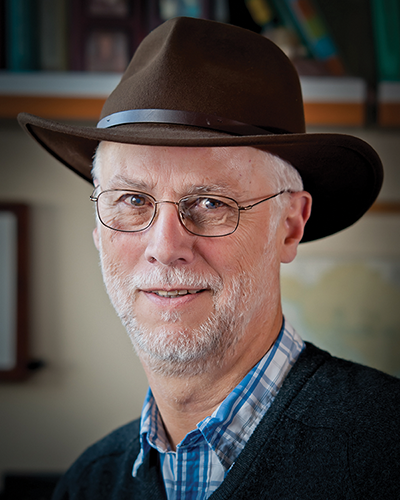
The ACM SIGCSE Award for Outstanding Contribution to Computer Science Education honors an individual in recognition of a significant contribution to computer science education; AccessComputing founding PI and professor emeritus Dr. Richard Ladner exemplifies this through his long career in CS teaching topics in accessibility and disability, mentoring students in these topics, and his work in AccessComputing and beyond.
Richard was honored at the conference and shared in a panel with other award winners, The Future of CS Education. Key points in the panel share that the future of education is human-centered, flexible, and technology-enhanced, with learning often becoming more personalized and focused on how we can make a greater difference. This panel was livestreamed and can be viewed online.
Though Richard has retired as PI, he continues to support AccessComputing and promote accessibility in CS. His extensive knowledge in the field helps continue our success, and we are exceptionally proud of this honor.