
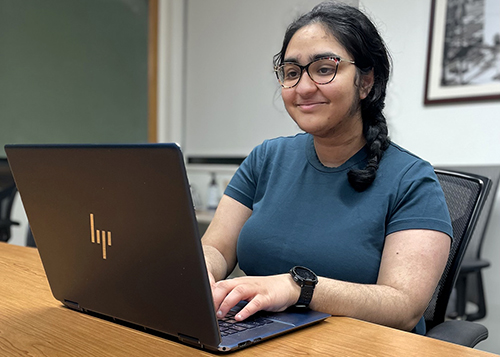
Supporting Individuals with Disabilities in Computing Research
Funded by the Computing Research Association, the goal of AccessUR2PhD is to support underrepresented individuals with disabilities on the pathway from being an undergraduate researcher to earning a PhD in a computing field. To realize this goal, the project will work toward two objectives:
To provide direct support for students interested in computing research through mentoring, leadership, and training activities.
To develop and disseminate resources to support (1) students in computing research and (2) faculty and graduate students who are mentoring students.
AccessUR2PhD represents a joint effort between the DO-IT Center and the Allen School at UW.
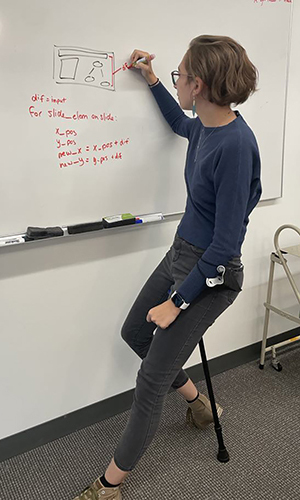
Mentoring: Student participants of AccessUR2PhD join the AccessComputing online mentoring community, which includes mentors and students with disabilities in computing fields from across the country. Project staff facilitates broader mentoring, connecting students with peers and with mentors through mentoring circles and focus groups.
Webinar Series: Project staff host webinars for a national audience to disseminate resources informed by project activities and the voices of underrepresented computing students and faculty with disabilities.
Project Video: Informed by project activities and the lived experiences of computing students and faculty with disabilities, project staff are creating one or more video productions about being successful as a disabled student in computing research and/or best practices to engage such students in computing research.
Connections with UR2PhD: Participants are referred to the UR2PhD undergrad research methods course, mentor training program, and workshops. The project also encourages other AccessComputing participants to engage with UR2PhD programs and offer support to UR2PhD to increase the accessibility of its activities and disability-related information contained therein.
Resources and Publications: Based on the webinar series and input from participants, the project team develops and publishes information briefs on topics such as advice for students with disabilities getting started in undergraduate research, succeeding in graduate school, and how to support disabled students as a mentor.
Publications
These three publications were created based on feedback from disabled graduate students in computing at universities across the US, as well as recent research on students with disabilities and on the writing of disabled people about their experiences in academia.
Advice for Disabled Computing Students: Engaging in Research and Planning for Grad School
Students with disabilities are often well-suited for research, having strong problem-solving skills, creative thinking, and persistence. Exploring research and planning for graduate school can help disabled undergraduates prepare themselves for research careers. When students start thinking about graduate research, the biggest shift to understand is the difference between undergraduate education, focused on consuming existing knowledge, and graduate education, where the goal is to produce new knowledge. Discover methods and tools for engaging in research, finding accommodations for PhD programs, building relationships with mentors, and developing a strong research portfolio.
Tips for Disabled Computing Students: Navigating Graduate School on the Path to a PhD
Graduate school may present a variety of barriers to students with disabilities. This might be physical barriers on campus, a lack of support, physical demands of traveling to conferences, or the time-consuming nature of graduate school. Learn strategies for navigating graduate school with a disability.
Mentoring Students with Disabilities Pursuing Computing Research Opportunities
People with disabilities often develop creative ways of navigating their daily lives in environments and systems that are inaccessible. This creativity is highly valuable in research settings; however, students with disabilities are underrepresented in undergraduate research and in PhD programs for a variety of reasons. Faculty and graduate student mentors can be valuable mentors to disabled students, helping them succeed in rigorous PhD programs and research.
Peer-Reviewed Paper
Improving Equity and Access for Graduate Students with Disabilities
Graduate computing programs are launchpads for innovative careers, yet a persistent access gap limits opportunities for graduate students with disabilities, particularly at the doctoral level. This paper argues for targeted interventions to increase educational equity. We draw from the literature to outline key challenges and institutional barriers. We then propose prioritized actions for universities, which include crafting graduate-specific accommodation policies, enhancing assistive technology support, improving the accessibility of research materials and activities, and building disability-inclusive cultures. By building on existing disability support infrastructure—which currently focuses on undergraduates—institutions can broaden participation in graduate-level computing education.
Webinars
Supporting Students with Disabilities in Computing Research
8/5/2026
This webinar focused on practical strategies and recommendations for creating more inclusive research opportunities for students with disabilities. Drawing on insights from the AccessUR2PhD mentoring circles and focus groups, we share what students and mentors identified as most effective in supporting undergraduates with disabilities on research and graduate school pathways.
Experiences of Graduate Students in their Programs and Research
4/6/2026
During this session, graduate student panelists with disabilities will share their experiences navigating graduate school in computing, including their research journeys, mentorship experiences, and advice for students considering a PhD. The session will include guided questions as well as time for audience Q&A.
Supporting Students with Disabilities in Research
11/7/2025
This webinar focused on practical strategies and recommendations for creating more inclusive research opportunities. Drawing on insights from the AccessUR2PhD mentoring circles and focus groups, we share what students and mentors identified as most effective in supporting undergraduates with disabilities on research and graduate school pathways.
Dr. Brianna Blaser (PI) has led multiple high-level projects to increase the participation of people with disabilities in computing education and careers. She is the Director and Co-PI for AccessComputing and PI for AccessADVANCE, an NSF-funded project focused on women with disabilities in STEM faculty careers. Her work includes direct interventions for individuals with disabilities and supporting faculty, employers, and other stakeholders to create measurable institutional change.
Scott Bellman (Co-PI) is the director of the University of Washington’s Disabilities, Opportunities, Internetworking, and Technology (DO-IT) Center and serves as PI of Neuroscience for Neurodiverse Learners. He is the UW PI and West Coast Hub Leader of the Eddie Bernice Johnson Alliance TAPDINTO-STEM. Scott serves as Co-PI of SEEN Tech Professionals and Co-PI of AccessUR2PhD, funded by the Computing Research Association. He is Director of Diversity at the UW Center for Neurotechnology, and an editor of the book Perspectives of STEM Students with Disabilities.
Dr. Maya Cakmak (Co-PI) is an associate professor in UW’s Paul G. Allen School of Computer Science and Engineering with a specialization in human-robot interaction. She is PI of AccessComputing. Her research includes projects on assistive robotics for people with severe motor disabilities. She is the winner of the 2022 Anita Borg Early Career Award for advancing innovation and broadening participation in human-centered robotics.