
These webinars are designed for educators, mentors, and program staff who want to create more accessible and inclusive learning environments in computing and technology. Each session features practical strategies, real-world examples, and insights from experts and practitioners on topics such as universal design for learning (UDL), accessible curriculum development, inclusive teaching practices, and supporting students with disabilities as they pursue computing education and careers. Whether you teach in a classroom, design curriculum, or advise students, these webinars offer valuable tools and perspectives to help every learner thrive.
Explore Webinar Recordings on Accessibility, Universal Design and Supporting Students in Computing
Supporting Students with Disabilities in Computing Research
Learn Learn practical strategies and recommendations for creating more inclusive research opportunities for students with disabilities.
Interactive Learning Games for Teaching Accessible Design
This webinar introduces a set of interactive learning games designed to teach principles of accessible and inclusive design.
New Ideas in Accessible Math/STEM
Speakers discuss their efforts in making mathematics and STEM education more accessible for students with disabilities.
Where are the Disabled Students? A Literature Review of Disability Inclusion in Computing Education Research
Learn about disability perspectives and how disabled voices are integral to create inclusive practices and more viable computing research......................................................................................................................
Beyond Compliance: Creating Accessible Classroom Experiences in Computer Science
This panel will discuss how some of UNC Charlotte's faculty approached modernization of their courses to embrace and apply universal design and inclusive classroom practices.
Experiences of Graduate Students in their Programs and Research
Webinar on Graduate Students with Disabilities Panel Pathways to a PhD in Computing
Disability, Pop Culture, and Technology
In this webinar, she will explore representation in media and pop culture; what portrayals, especially those related to technology, reveal about real-world innovation; and where narratives veer off course.
Book Chat with author Rua Williams: Disabling Intelligences: Legacies of Eugenics and How We are Wrong about AI
A live Q&A with Rua M Williams, author of Disabling Intelligences: Legacies of Eugenics and How We are Wrong about AI.
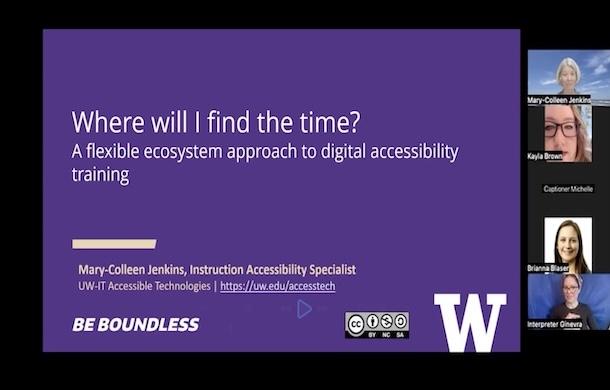
Where Will I Find the Time? A Flexible Ecosystem Approach to Digital Accessibility Training
When it comes to digital accessibility training, instructors often ask, “Where will I find time to learn these new skills?” followed by, “Where do I start?”
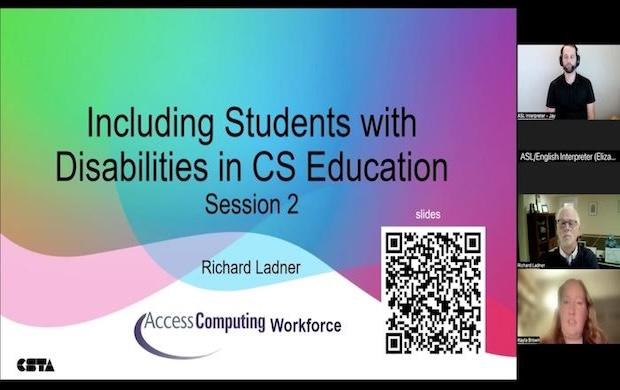
Including Students with Disabilities in CS Education, Part 2
Dr. Richard Ladner engages participants in three CS Teacher Standards that closely align with the inclusion of K-12 students with disabilities in CS education.
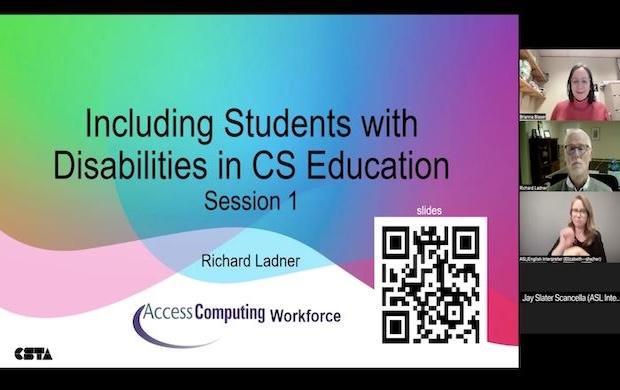
Including Students with Disabilities in CS Education, Part 1
Dr. Ladner engages participants in three CS Teacher Standards that closely align with the inclusion of K-12 students with disabilities in CS education.
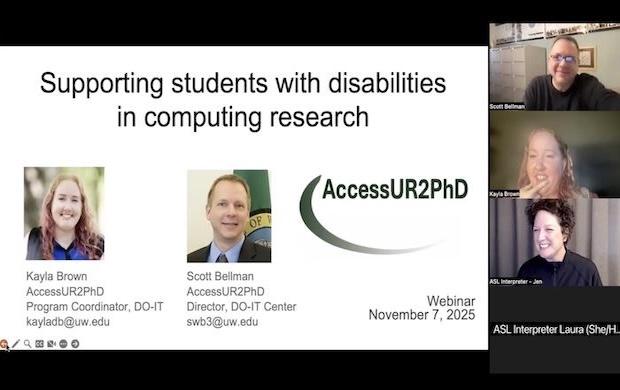
Supporting Students with Disabilities in Research
Learn practical strategies for creating more inclusive research opportunities, based on feedback from students with disabilities.
Impostor Phenomenon in an Academic Environment
Impostor phenomenon, the feeling that you don’t truly belong, is common among academics and can negatively impact both quality of life and the pursuit of knowledge, regardless of actual achievements.
GitHub's Pledge to Help Improve the Accessibility of Open Source Software at Scale
Learn how GitHub is working to make open-source assistive technology accessible and available to all, including people with disabilities.
Seven Practical Moves Toward Disability Justice in Computing Education
Amy will share how she applies a Universal Design in Learning framework to her teaching through a disability justice lens that addresses intersections with race, gender, and class.
Generative AI and Accessibility Benefits, Trade-offs and Impacts of Intersectionality -
Researchers present findings on the the benefits, trades offs and impacts of using Generative AI for accessibility by members of the Deaf/HoH communities and Neurodivergent individuals.
Making a Plan: Developing a Strategy for Course Accessibility
Learn how to establish a starting point with digital accessibility in three steps.
GAAD - Interdisciplinary Computing Instructor Workshop: Making Courses More Accessible
Learn about strategies for making computing courses more compliant with the new ADA 2026 digital accessibility requirements.
Accessibility for STEM in Higher Education
Panelists discussed their preferred methods for representing math equations, shared experiences with accommodations and emphasized self-advocacy, independence, and the value of community support.
Starting the Journey: Accessibility Tips for Everyday Tasks
Learn about three key accessibility skills that can be applied when creating word documents, Canvas pages, slide decks, and other types of content.