
These webinars are designed to support students with disabilities and students who want to make computing more accessible as they pursue education and careers in computing and technology. Each session offers insights from experts, mentors, and peers who share practical strategies, personal experiences, and resources on topics such as accessibility, universal design, self-advocacy, inclusive teaching and learning, and navigating pathways to professional success. Whether you’re just beginning your journey or looking to deepen your knowledge, these webinars provide valuable guidance and inspiration for building an accessible and inclusive future in computing.
Explore Webinar Recordings on Accessibility and Success in Computing
Book Chat with author Rua Williams: Disabling Intelligences: Legacies of Eugenics and How We are Wrong about AI
A live Q&A with Rua M Williams, author of Disabling Intelligences: Legacies of Eugenics and How We are Wrong about AI.
Where Will I Find the Time? A Flexible Ecosystem Approach to Digital Accessibility Training
When it comes to digital accessibility training, instructors often ask, “Where will I find time to learn these new skills?” followed by, “Where do I start?”
Supporting Students with Disabilities in Research
Learn practical strategies for creating more inclusive research opportunities, based on feedback from students with disabilities.
Impostor Phenomenon in an Academic Environment
Impostor phenomenon, the feeling that you don’t truly belong, is common among academics and can negatively impact both quality of life and the pursuit of knowledge, regardless of actual achievements.
GitHub's Pledge to Help Improve the Accessibility of Open Source Software at Scale
Learn how GitHub is working to make open-source assistive technology accessible and available to all, including people with disabilities.
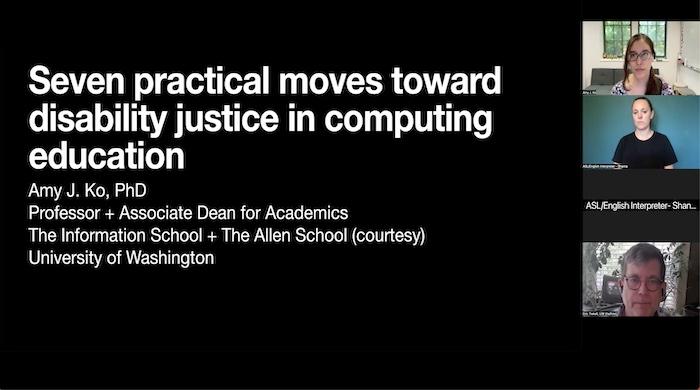
Seven Practical Moves Toward Disability Justice in Computing Education
Amy will share how she applies a Universal Design in Learning framework to her teaching through a disability justice lens that addresses intersections with race, gender, and class.
Generative AI and Accessibility Benefits, Trade-offs and Impacts of Intersectionality -
Researchers present findings on the the benefits, trades offs and impacts of using Generative AI for accessibility by members of the Deaf/HoH communities and Neurodivergent individuals.
GAAD - Interdisciplinary Computing Instructor Workshop: Making Courses More Accessible
Learn about strategies for making computing courses more compliant with the new ADA 2026 digital accessibility requirements.
Strategic Interview Preparation
Learn how to strategically prepare for interviews
Accessibility for STEM in Higher Education
Panelists discussed their preferred methods for representing math equations, shared experiences with accommodations and emphasized self-advocacy, independence, and the value of community support.
Pathways to Greater Accessibility and Inclusion for Postdocs with Disabilities
Dr. Mittendorf provides a historical overview of models of disability, specifically examining their impact on the treatment of disability within academia and related fields.

The New ADA Title II Regulations on Digital Technologies: What it Means for Your School
Eve Hill explains the Department of Justice’s new ADA Title II regulation requiring websites and digital offerings of state & local governments as well as public institutions of higher education to comply with the Web Content Accessibility Guidelines 2.1
This Class Isn't Designed for Me!
Imagine a more inclusive and sustainable future of design education and hear case studies from personal experience in redesigning course experiences for students with disabilities.
NextGen Leaders Initiative
NextGen Leaders are college students and recent graduates with disabilities, including veterans, who represent sought after talent by Disability:IN’s 550+ Corporate Partner companies.
Scratch Tactile: Making Creative Coding Accessible To All
Learn how Scratch Tactile's tangible programming blocks allow *all* students to learn together, creating an inclusive environment for everyone.
The Basics of Burnout
A facilitated discussion which defines the core components of burnout, presents evidence-based strategies to address the symptoms, and discusses how to prevent work-related stress.
Introduction to Mental Health Literacy
Learn more about prevalence of mental health illness in general and in academic populations.
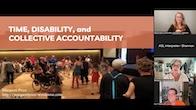
Crip Spacetime: Access, Failure, and Accountability in Academic Life
Price argues for a turn toward collective accountability in order to make academe more accessible for all marginalized persons.
BIT - Employment Services for People in the Disability Community (Audio-Description)
The Blind Institute of Technology (BIT) provides employment services to individuals with any type of disability.
BIT - Employment Services for People in the Disability Community
The Blind Institute of Technology (BIT) provides employment services to individuals with any type of disability.